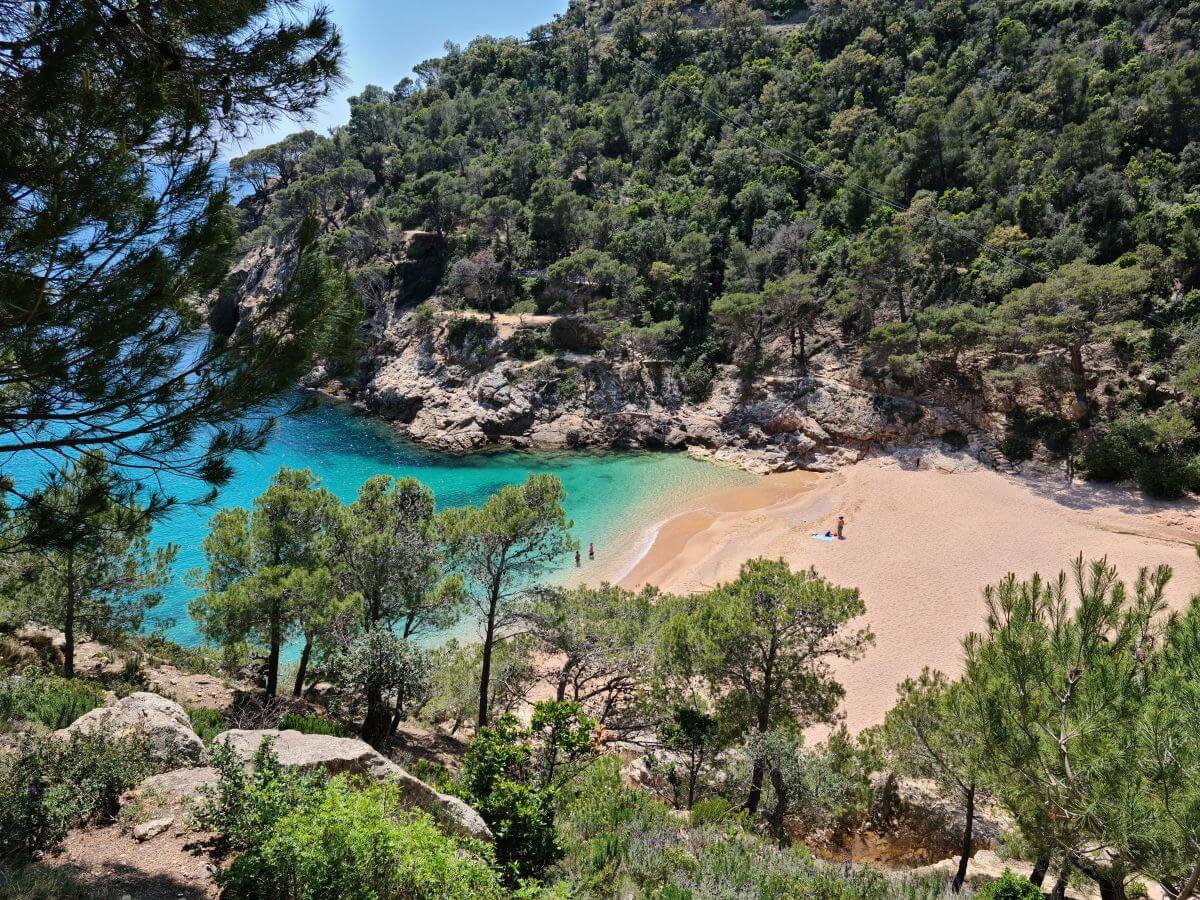
Cala Pola
15 min drive
This small, sheltered cove is situated along the scenic road to Sant Feliu de Guíxols and provides a quieter swimming environment. It serves as a natural contrast to the main town beaches.

Tossa de Mar sits 11.5 kilometers north of Lloret de Mar along the Costa Brava shoreline. The distance is short, but the route you choose determines whether you arrive in 15 minutes or two hours. This guide covers every option—road, water, and footpath—with verified times and seasonal factors.
Quick answer
Tossa de Mar is 11.5 kilometers from Lloret de Mar measured along the coastal road. By car or taxi, the journey takes 15 to 20 minutes via the GI-682 route. The summer ferry covers the distance in approximately 20 minutes, while the coastal hiking trail—Camí de Ronda—spans roughly 11 kilometers and requires 3 to 4 hours depending on pace and stops.
The 11.5-kilometer gap between Lloret de Mar and Tossa de Mar represents one of the Costa Brava's most traveled short-distance routes, yet the character of each journey differs sharply. The coastal road winds through pine-covered hills and cuts inland before descending into Tossa's medieval quarter, while the waterborne route traces the rocky shoreline past hidden coves inaccessible by road. The overland hiking path follows centuries-old fishermen's trails etched into cliffsides, offering direct coastal access but demanding stamina and proper footwear. How far is Tossa de Mar from Lloret de Mar depends partly on method: the driving distance via GI-682 measures 11.5 kilometers, but the ferry path is slightly shorter at roughly 10 kilometers across open water. The Camí de Ronda hiking route adds length through natural undulation—11 kilometers of trail distance translates to approximately 300 meters of cumulative elevation change. Summer months see all three routes operating simultaneously, while winter limits options to road travel and the footpath, as seasonal ferry services suspend operations from late October through March. The road route serves most travelers: direct, fast, and year-round. It bypasses the coastal drama in favor of efficiency, threading through Sant Feliu de Guíxols junction before the final approach to Tossa's Vila Vella fortifications. The hiking alternative appeals to those treating distance as experience rather than obstacle—the trail delivers solitude, swimming coves, and perspectives unavailable from asphalt or deck rail. Ferry passengers occupy a middle ground, covering the span in similar time to drivers but arriving at Tossa's beachfront rather than its hillside parking zones. Understanding the distance between Lloret and Tossa means recognizing what each option prioritizes. Drivers optimize for speed and schedule flexibility. Hikers trade time for immersion in the coastal landscape that defines this UNESCO-protected stretch. Ferry travelers gain a maritime approach to Tossa's fortified silhouette, visible from the water exactly as medieval sailors first encountered it. The 11.5-kilometer measurement remains constant, but the journey's texture shifts entirely based on how you choose to cross it.
“The 11.5-kilometer measurement remains constant, but the journey's texture shifts entirely based on how you choose to cross it.”
Tossa de Mar is located approximately 12 kilometers northeast of Lloret de Mar along the Costa Brava coastline. Travelers can choose between the scenic coastal road or the direct maritime route.
GI-682 road
Moventis line (Lloret–Tossa)
Ferry from Lloret de Mar beach
If arriving by car, note that parking in the center can be limited; using the ferry provides direct access to the beach area near the entrance to the Vila Vella.
The best arrival window is 08:00–10:00 to avoid mid-day crowds and summer heat in the narrow streets. Planning your visit for these morning hours ensures a more comfortable experience when navigating between Lloret de Mar and Tossa de Mar.
Mild, 18°C to 24°C
These shoulder months offer comfortable temperatures and fewer visitors. This period is ideal for those who prefer quieter paths.
Hot, 25°C to 30°C
Peak tourism brings heavy traffic to the coastal roads. Early departures are essential to manage transit time.
—
Traveling between 08:00 and 10:00 provides the most efficient transit. Mid-day peaks frequently cause delays on the regional routes.
Verdict: The best time to visit is during the shoulder months of May or October, arriving between 08:00 and 10:00 on a weekday.
The historic Vila Vella in Tossa de Mar remains accessible to visitors throughout the week. The site operates on a continuous schedule to accommodate those exploring the walled town.
Exploring the surroundings of Tossa de Mar allows you to extend your coastal trip beyond the historic walled town. These nearby locations offer a blend of natural scenery and historical interest that complement a visit to the Vila Vella.
15 min drive
This small, sheltered cove is situated along the scenic road to Sant Feliu de Guíxols and provides a quieter swimming environment. It serves as a natural contrast to the main town beaches.
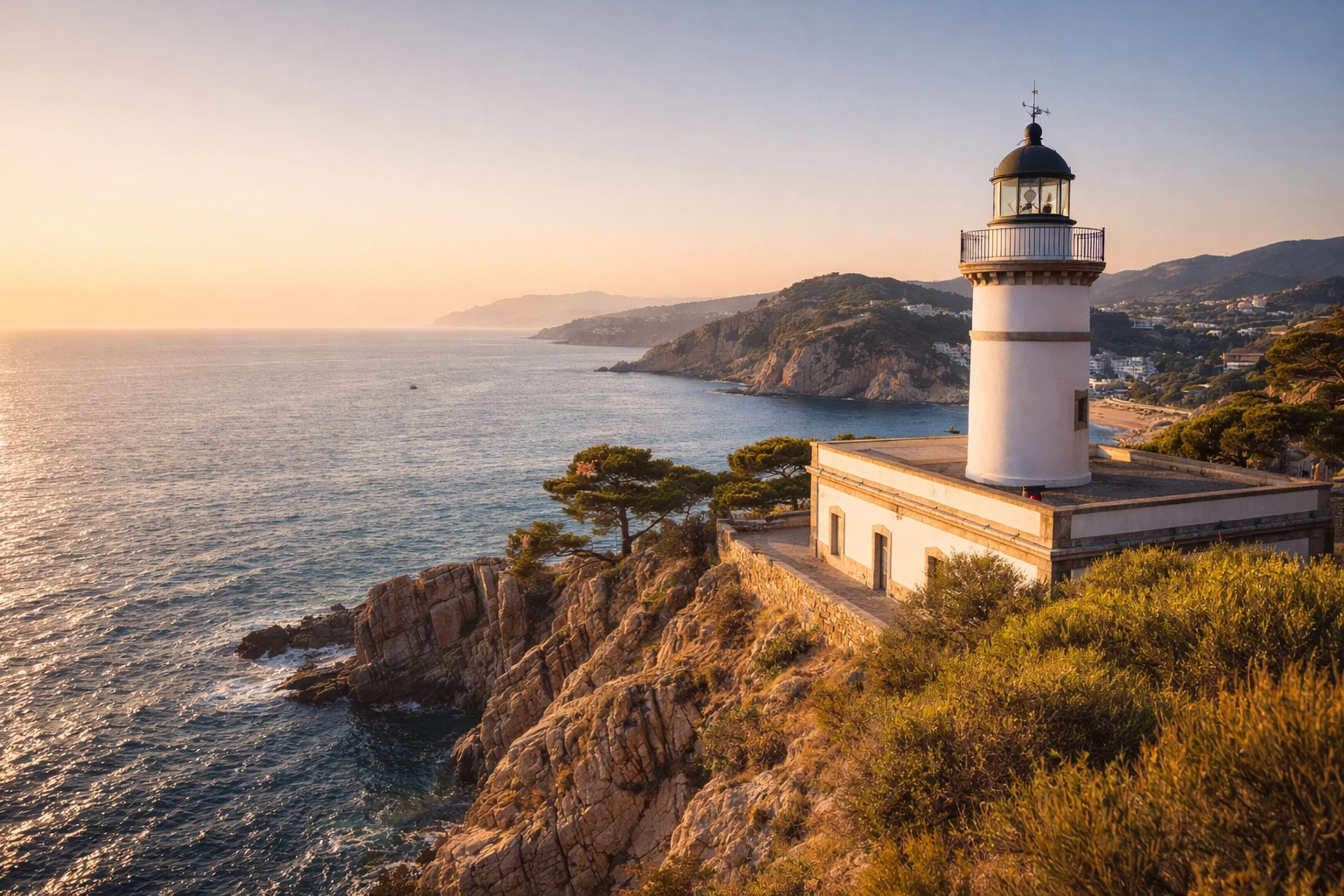
10 min walk
Located at the highest point of the Vila Vella, this site offers views of the coastline and the Mediterranean Sea. It pairs well with your walk through the historic fortifications.
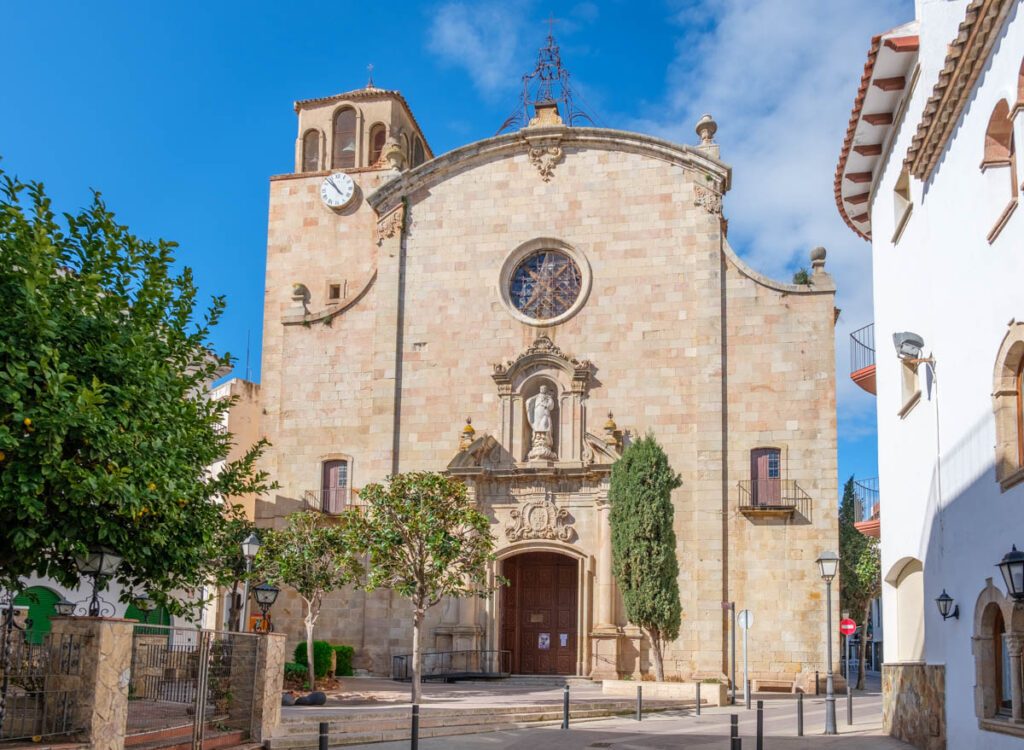
5 min walk
This 18th-century church is located within the town center and showcases neoclassical architecture. It is a logical stop before or after exploring the medieval walls nearby.
Everything you need to know about how far is tossa de mar from lloret de mar
The distance between these two Costa Brava towns is approximately 12 to 14 kilometers depending on your route. Understanding how far is Tossa de Mar from Lloret de Mar helps in planning your coastal journey along the Mediterranean shoreline.
Yes, seasonal ferry services connect the two towns, providing a scenic coastal view. Many visitors ask how far is Tossa de Mar from Lloret de Mar to determine if a maritime crossing is more convenient than road transport.
Entry to the historic Vila Vella walled town is 0 EUR. This landmark is accessible to the public as a free historic site within the municipality.
The site remains open daily from 00:00–23:59, allowing visitors to explore the medieval ramparts at their leisure. Please note that while the area is open, specific facilities within the walls may operate on different schedules.
We recommend arriving between 08:00–10:00 to avoid mid-day crowds. Visiting early also helps you escape the summer heat often found within the narrow cobblestone streets.
When driving, the journey follows the winding GI-682 road, which offers significant views of the coastline. Knowing how far is Tossa de Mar from Lloret de Mar by car ensures you account for the characteristic curves of this scenic route.
While possible for experienced hikers via the Cami de Ronda trail, it is a lengthy trek involving rugged terrain. Most visitors choose ferry or road transport to cover the distance between these Mediterranean gems.
Travel by sea is a popular alternative that highlights the proximity of the two towns. Ferry operators provide regular maritime links throughout the high season, offering a unique perspective of the cliffs and coves.