English| EUR
Suggested for you
More currencies
Choose a language
The ferry connecting Lloret de Mar and Tossa de Mar operates daily throughout the warmer months, offering a scenic alternative to the coastal road. Understanding the departure pattern and seasonal adjustments helps you plan a reliable connection between the two towns.
Quick answer
Ferries depart Lloret de Mar for Tossa de Mar daily from 09:50 to 18:01, with the first sailing at 09:50 and the last return departure at 18:01. During peak summer months, boats run approximately every 90 minutes, while spring and autumn see reduced frequency with longer intervals between sailings. The journey takes roughly 20 minutes in calm conditions.
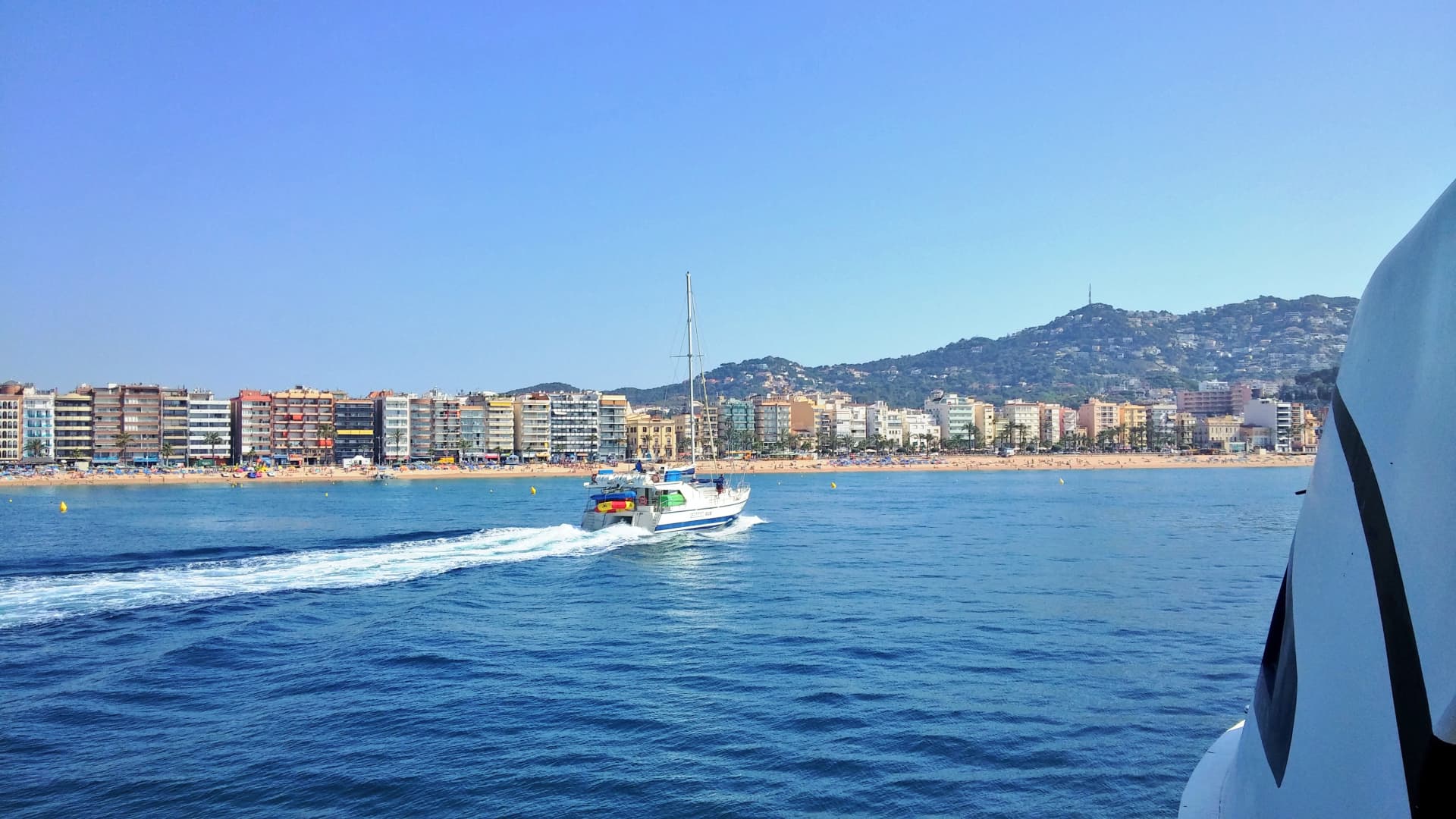
The passenger boat service linking Lloret de Mar and Tossa de Mar carries more than 100,000 travelers each season, making it one of the Costa Brava's most heavily used coastal connections. Unlike the winding GI-682 road that climbs inland before descending into Tossa, the ferry follows the shoreline directly, passing below cliffs and coves inaccessible by car. Seasonal demand shapes the lloret de mar to tossa de mar ferry timetable significantly. Between late June and early September, operators add mid-morning and early-afternoon sailings to handle peak visitor flow, with departures spaced roughly 90 minutes apart. Outside this window, the schedule contracts: May and October typically see four to five daily crossings, while services pause entirely from November through March when passenger numbers drop below operational thresholds. Weather disruptions are rare but possible—strong easterly winds occasionally force cancellations, particularly in spring. Boarding begins 15 minutes before each scheduled departure from the embarkation point at Passeig d'Agustí Font. Arrive with enough margin to purchase tickets if you haven't reserved in advance, as same-day sales close five minutes before casting off. The morning sailings between 09:50 and 11:30 offer the calmest seas and the most reliable on-time departures, before afternoon thermal winds pick up along the coast. Return sailings from Tossa follow a mirrored pattern, with the last boat back departing Tossa at 17:30 to arrive in Lloret by 18:01. The boat service runs independently of road schedules, so connections to buses or taxis require separate planning. Most visitors use the ferry as a day-trip link rather than a commuter shuttle—the frequency supports a few hours exploring Tossa's old quarter and beaches before catching a return crossing. Round-trip fares average 30 EUR for adults, with operators like Dofi Jet Boats managing the majority of sailings under seasonal licenses granted by the port authority.
“The ferry follows the shoreline directly, passing below cliffs and coves inaccessible by car.”
The ferry service between Lloret de Mar and Tossa de Mar operates on a consistent daily schedule throughout the week. Passengers can rely on the same operational window from Monday through Sunday.
The cost of ferry travel between Lloret de Mar and Tossa de Mar is determined by the service provider and the specific travel season. Prices reflect standard fare expectations for this coastal route.
Verdict: The typical adult round-trip ticket price is 30 EUR, though this cost varies by provider and season.
The ferry boarding point for the service to Tossa de Mar is located at Passeig d'Agustí Font, s/n, 17310 Lloret de Mar, Girona, Spain. This central waterfront location is easily accessible on foot from the main Lloret de Mar beach promenade.
Walk along the main promenade (Passeig d'Agustí Font) toward the central beach area
Local bus to Lloret de Mar central station, then walk to the beach
Drop-off at the nearest point to Passeig d'Agustí Font
Plan to arrive at the boarding area between 09:50–11:30. Following this arrival window allows you to board efficiently and helps avoid peak afternoon heat and crowds on the boat.
The best arrival window for the ferry is 09:50–11:30. Arriving early during this period helps visitors avoid peak afternoon congestion and the highest temperatures of the day.
—
Boarding during the 09:50–11:30 window offers more seating choices and a quieter experience. It is the most effective way to avoid the mid-day rush.
Peak heat levels
Vessel occupancy is highest as temperatures climb. This period often involves longer wait times and crowded decks.
Cooling temperatures
Crowds begin to thin as the day concludes. This period provides a calmer atmosphere for the return journey.
Verdict: The best time to experience the ferry is by arriving between 09:50 and 11:30, particularly during the shoulder months of May, June, or September.
Everything you need to know about lloret de mar to tossa de mar ferry timetable
The lloret de mar to tossa de mar ferry timetable operates daily from 09:50 to 18:01. These services run regularly throughout the summer season to connect the two coastal towns. You can view the full daily rotation on the official operator website. Since schedules can vary slightly by season, it is best to check the lloret de mar to tossa de mar ferry timetable before heading to the port. The current adult round-trip ticket price is 30 EUR, though this may fluctuate depending on the provider and season. Prices are generally standardized for this route, but please consult the official portal for the most accurate current rates. For the best experience, we recommend arriving between 09:50 and 11:30 to avoid peak heat and afternoon crowds. Planning your trip using the lloret de mar to tossa de mar ferry timetable early in the day often results in a more comfortable journey. The ferry departs from Passeig d'Agustí Font, s/n, 17310 Lloret de Mar, Girona, Spain. This central location serves as the primary embarkation point for all coastal boat excursions. You can find detailed booking information via the official site at https://www.dofijetboats.com. This resource allows travelers to organize their maritime transport across the Costa Brava independently. Yes, the boat ride is generally popular with families as it offers a scenic view of the rugged coastline. It provides an accessible way to experience the Mediterranean waters without the need for strenuous hiking or driving. In the event of poor weather or sea conditions, boat operators may suspend services for safety reasons. It is advisable to verify the status of your crossing if high winds or storms are forecast in the region.